PCPRaidio Big Apps
Posted by homoludo on April 22nd, 2011 filed in Irish producers, radio shows5 Comments »
Last weeks radio show. Spacey goth tech from from me and top punky bassness from Sixfoot Apprentice.
PCPRaidio_Big_Apps
[audio:/PCPRaidio_Big_Apps_16_04_2011.mp3]
PCP
1.   MARIA MINERVA   – HAGASUXZZAVOL
2.   NICLAS JAAR   – SPACE_IS_ONLY_NOISE_IF_YOU_CAN_SEE
3.   MARIA MINERVA   -A_LITTLE_LONELY
4.   SALEM      -SICK
5.   BYETONE      -PLASTIC_STAR ALVO NOTO REMIX
6.   SALEM      -TRAXX –
7.   KASSEM_MOSSE   -DEMO_DRUMS_RIPPING
8.   CYCLO.      -ID#07 –
9.   OM UNIT      -THE_TIMPS_HRDVSION_REMIX
10.   SHED      -ESTRANG_
11.   BENOIT & SERGIO -WALK_AND_TALK
12.   SOUL CLAP & CHARLES LEVINE -LONELY_C_
13Â Â Â MARIA MINERVAÂ Â Â -NOBLE_SAVAGE
Sixfoot Apprentice
14.   MONO/POLY – “NEEDS DEODORANT” (FROM ‘MANIFESTATIONS EP’ ON BRAINFEEDER RECORDS).
15.   MELODICA DEATHSHIP – “SEA OF ABSU” (FROM ‘SALADE DE CONCOMBRES VOLUME 1’ ON COOLER THAN CUCUMBERS RECORDS) (IRE).
16.   FREE THE ROBOTS – “UNKNOWN” (FROM ‘STUSSY X TURNTABLE LAB BEATS’ ON TURNTABLE LAB RECORDS).
17.   FAUNTS – “FEEL LOVE THINKING OF” (MEXICANS WITH GUNS REMIX)” (FROM ‘REMIXICAN’ ON EXPONENTIAL RECORDS).
18.   SCHLACHTHOFBRONX FEAT 77KLASH & JAH DAN – “BROOKLYN ANTHEM (PARASITE MASHUP)” (UNRELEASED).
19.   DOSHY – “3WS” (FROM ‘MAD HOP VOLUME 1’ ON MAD HOP RECORDS).
20.   MELJOANN – “FIST” (FROM ‘!KABOOGIE 5TH BIRTHDAY SAMPLER’ ON !KABOOGIE RECORDS). (IRE)
21.   DEATH GRIPS – “WHERE IT’S AT” (UNRELEASED).
22.   JASON FORREST – “RAUNCHY” (FROM ‘THE EVERYTHING’ ON STAATSAKT RECORDS).
23.   MEXICANS WITH GUNS – “PROCESSION” (FROM ‘TEXAS’ ON EXPONENTIAL RECORDS).
24.   FANCY MIKE – “RAMACHANDRAN” (FROM ‘MADISON SQUARE GARDNER’ ON KING DELUXE RECORDS).
25.   PRINCE KONG & EXILE EYE – “SCENE CYCLE” (UNRELEASED) (IRE).
26.   PRINCE KONG & JAH BALANCE – “HAIL EM KLIPT” (UNRELEASED) (IRE).
27.   LAURA SHEERAN – “LUST OF PIG” (FROM ‘LUST OF PIG & THE FRESH BLOOD’ ON LAURA SHEERAN BANDCAMP) (IRE)
PCPRaidio _Smeary Sméar
Posted by homoludo on April 18th, 2011 filed in Irish producers, radio showsComment now »
A show from a couple of weeks ago. I will write about the first couple of tracks tomorrow, as they’re from the most important Irish beats record ever.
The Deviant ep is the most important Irish electronic/dance record ever. The first reason it is so important is that is very good. The second reason is that it is Irish dance music that sounds Irish. To Irish underground music ears this is usually a bad thing. It’s associated with the usual clichéd high kicking , wooly jumpered folk images and more recent cringers; Cotton eyed Joe, Bewitched , Afro Celtic  sound system, bad trad mash up amongst others.
Great, successful Irish dance records are so conspicuous by their absence (leaving aside the other reasons such as until recently the lack of any diasporic communities or strong counter cultural movements) because of this squirming discomfort with Irish culture.
Most Irish electronic music producers imitate. They imitate every electronic music culture. They will never succeed. Or if they do it will be pastiche and it will be too late.
I will post soon as to why this is the case.
[audio:/PCPRaidio_Six_footApp_Smeary_Sm%e9ars.mp3]Download or Click for Mobile devices
1.   DEVIANT   – Oh Gravity- On Community Skratch Music(IRE)
2.   DEVIANT-Send in the hounds- On Community Skratch Music(IRE)
Six Foot Apprentice
3.   DEVIANT – “Planxty Angsty” (unreleased) (IRE)
4.   GLAND & CONDUIT – “Anal Duct Nodding” (from “Ore” on Second Square To None Records) (IRE)
5.   BLUE VITRIOL – “Casiotone Rock” (from “They Went To Titan” on Jahtari Records)
6.   CATSCARS – “Droid” (from “Construction” on White Plague Records) (IRE)
7.   LAKKER – “Kleure” (from “Kleure” on Lakker bandcamp site) (IRE)
8.   JIMMY PENGUIN – “Dred” (from “Dred” on Jimmy Penguin bandcamp site) (IRE)
9.   ILEX – “Ilk” (from “Old Din” on Ilex bandcamp site) (IRE)
10.   HUNTER-GATHERER – “Serbia” (from “Fingerprint Series” on Hunter-Gatherer bandcamp site) (IRE)
PCP
11.   OLD APARATUS -Side_B_Track_1_2 On Deep Mehdi
12.   NICOLAS JAAR -Too_Many_Kids_Finding_Rain_In_the_Dust   On Circus Company
13.   NICOLAS JAAR -Space_Is_Only_Noise_If_You_Can_See   On Circus Company
14.   KOWTON- Drunk On Sunday   Idle Hands
15.   RAINBOW ARABIA -Without_You- On Kompact
16.   CHASING VOICES   Acidbathoryz On Preserved Instincts
17.   ACTRESS   Machine & Voice   On Non Plus
18.   CUTTY RANKS, GENERAL LEVY-Weh dem watch we On Party Time
19.   BRANDY METHOD MAN    what about love x5 riddim   on Party Time
20.   BEENIEMAN_REDMAN   What’s love?   On Madchemist vol1
21.   CUTTY RANKS MR SHOTTY   mr shotty aread codes   On Party Time
22.   DJ XELA    Dance hall queen mashup    On Party Time
23.   LIBERTY KING   Ain’t it funny   On madchemist vol1
24.   MOVADO     No head sound bwoy On sound bwoy
25.   MOVADO   U CAN’T ESCAPE   sound bwoy
26.   KARTEL-   COUNT YOU’RE DUPPYS Onsound bwoy
27.   MOVADO -   Toe to Toe On sound bwoy
28.   OLD APARATUS -   Side_A_Track_1On Deep Mehdi
29.   GATEKEEPER -Chains OnMerok
30.   ALTER EAGLE-Six_Foot_Arms On 100% Silk
Desiring Scenes
Posted by homoludo on April 13th, 2011 filed in video, writingComment now »
A good piece of music writing from Wire blog the Mire. Like a 90’s Melody Maker/ NME piece, it makes you (me )want to buy the record/s.
Erotic neurotic
“I don’t know how it comes across when I say this, but I am deeply invested in sex and sexiness,†Amanda Brown tells Simon Reynolds in the May issue of The Wire. Even though it is expressed in that peculiarly American way that makes Amanda sound like she regards the very fact of her being in the world as a business venture to be injected with regular shots of cultural capital, what she is actually talking about is her vision for the kind of artists and music now being issued by Not Not Fun, the label she runs with husband Britt out of their home in Eagle Rock, LA, and in particular its hot little sister imprint, 100% Silk.
As Simon points out, both Amanda’s and Not Not Fun’s roots lie deep in America’s post-Riot Grrrl Noise/lo-fi DIY underground. This is a realm where sex exists purely as metaphor, something to be invoked or mobilised only in order to expose the brutality of power relations, or to subvert the oppression of normative social relations by flaunting its most taboo, transgressive manifestations. In contrast, almost all the music now being issued by NNF and 100% Silk reflects Amanda’s lust for 70s and 90s dance music experiences, her desire to luxuriate in the sensual inclusiveness (or inclusive sensuality) of dub, disco and downtempo beatz, and the way these bass-centred musics work to eroticise the entire body (in contrast to the way Noise targets it as a conflict zone in a Total War, or the way Goth/Emo is convulsed by its base functions and desires, or the way alt.rock puts all the emphasis back on the same old erogenous zones as trad.rawk).
You can track NNFs aesthetic shift from pavement to Penthouse by comparing the messthetix that define the handmade packaging of the label’s early cassette editions with the image on the generic sleeves of the 12″s released by 100% Silk, which looks like it has been lifted from a mid-80s Athena poster, all soft fleshy curves, hard angles and cool surfaces, a pre-Photoshop phantasy of aspirational erotica and glam aesthetix.

When it comes to her own LA Vampires project, Amanda’s investment in sex and sexiness actually feels more cute than carnal, manifesting as a license to indulge in some slyly provocatve fun and games.
The ‘two girls in the shower’ sequence in the vid for the LA Vampires/Matrix Metals collaboration “How Would You Know?†might sound like a cynical media grabbing manoeuvre straight out of a Katy Perry vid, but it feels more like an instance of adolescent juvenilia, a ‘whatever’ Chatroulette provocation, two twentysomething women getting back in touch with their insouciant teenage selves, deadpanning to the lens as they fake their way through a routine of getting ready for a big night out (and if you want to come over all Lacanian about it, flirting with the gaze they know is there, just out of sight, on the other side of the screen).
LA Vampires feat. Matrix Metals – How Would U Know from Not Not Fun on Vimeo.
In the vid for “Make Me Over†Amanda regresses even further, into a pre-pubescent state of innocence eliding into self-consciousness (or self-awareness), rummaging in the dressing up box, pulling out a sequence of exotic costumes, posing, pouting and dancing in front of the camera, which in this case is a substitute for her pre-teen bedroom mirror, the first witness to vouchsafe an emerging sense of her own sexuality.
LA Vampires feat. Matrix Metals – Make Me Over from Not Not Fun on Vimeo.
But judging from an interview recently posted on the 100% Silk blog, the NNF/100% Silk artist who Amanda seems to have most invested in when it comes to making flesh her new aesthetic is Maria Minerva, aka Estonian ‘dream pop songstress’/’disco-not-disco diva’ (and, it should be noted here, former intern at, and current contributor to, The Wire) Maria Juur.
During the interview Maria demurely deflects Amanda’s line of questioning, insisting she feels more awkward and uptight than the potentially hot ‘n’ sexy “Eastern European supermodel goddess†(to quote an earlier 100% Silk blog post) that Amanda seems to want her to be. But a quick sweep through some of the evidence now archived out there on the www would seem to suggest that Maria’s artistic project is about as deeply invested in playing around with notions of sex and sexiness as her label boss could wish for.


Originally taped at the back end of 2010, the vid for “Strange Things Happening In My Roomâ€, a track on Maria’s recent NNF tape Tallinn At Dawn, feels like an ironic take on the Talk Talk idents that topped and tailed the ad breaks in the last series of The X Factor (which was still being broadcast at the time this vid was posted). Made to feel like the genuine article (groups of PJ-clad BFFs on a sleepover, having fun with the webcam, miming along to their current fave pop tunes), the idents were moments of pure media artifice, and Maria’s vid feels like an ultra hip and knowing restaging, so a fabricated mass media event masquerading as a moment of tweenie jouissance becomes the site for an occluded adult drama, a solipsistic domestic episode veiled in mystery but heavily suggestive of auto-erotic experience.
The ‘censored by YouTube’ vid for the “So High†track by contrast makes everything explicit, appropriating scenes from what looks like a particularly sleazy slice of hi-brow Euro porn. Before YouTube censored it, this vid went most of the way.
Intriguingly, in the Info section of this post Maria quotes a couplet from Gang Of Four’s “Natural’s Not In Itâ€, “The problem of leisure/What to do for pleasure?â€, sourced not from its original context, the 1979 Entertainment! LP, but from its inspired use on the soundtrack to Sophia Coppola’s sumptuous 2006 soft porn period drama Marie Antionette.
“So High†is taken from Maria’s forthcoming NNF LP Cabaret Cixous, whose title references the French feminist theorist/writer Hélène Cixous, the distaff Derrida, whose 1975 essay The Laugh Of The Medusa upped the ante on existing theories of non-normative sexuality such as polymorphous perversity and jouissance to instruct women thus: “Censor the body and you censor breath and speech… Your body must be heard.†Which sounds like a permissive pre-echo of Maria writing (for France’s Hartzine) about the effect on her teenage body of Roy Davis Jr’s sublime 1997 Deep House track “Gabrielâ€: “This track got me into House when I was 14. Made me go through changes in my body and I am not talking about puberty! “Gabriel†gave me an idea what a groove could do to you, and oh it felt good.â€
Appropriately enough, the ‘teaser’ vid for “Disko Blissâ€, which was posted in advance of the release of Maria’s 100% Silk 12″, feels like it arrives as a consequence of the effect of both Cixous’s theories and Davis Jr’s practice, foregrounding the kind of sensual total body experience brought on by dancing to disco and Deep House. Although Maria can’t resist inserting a little ironic touch to undercut the erotic effect: keep watching and the beads of sweat glistening suggestively on the torsos of the male and female dancers are revealed to be fake.
MARIA MINERVA – DISKO BLISS teaser from 100% Silk on Vimeo.
As with most of the images of her circulating on the blogosphere, in the photo on the cover of Tallinn At Dawn Maria returns your fascinated gaze with deadpan inscrutability (is she projecting satisfaction or disdain or just indifference?).

The image’s grainy soft focus monochrome makes it feel like a relic from the mid-70s. But is it a promo shot of a Laurel Canyon songstress, or a still from yet another slice of ‘sophisticated’ Euro porn? Or both? Maria as a double exposure of Laura Nyro and Sylvia Kristel?
In his piece in the May issue, Simon refers to Maria’s 100% Silk 12″ as “delightfully quirky electro-bopâ€, which feels about right for what is essentially a collection of LCD dance moves (one of Maria’s own tags for these tracks is ‘slutwave’). But his description of Tallinn At Dawn as “marvelously woozyâ€, while texturally correct, feels too reductive for what is an unusually captivating body of work, one that feels like the product of a genuinely original sensibility.
Some of the arrangements here have a real sense of mystery about them: the way all the parts are shadowed and multiplied by their echo chamber doppelgangers, and the way the individual synth lines, samples and rudimentary drum machine patterns interlock or overlap in unexpected ways gives the songs a complex and seductive polyrhythmic vibe. Rather than the vacuous synth pop of Nite Jewel (the comparison drawn by most Altered Zones type bloggers out there), what it makes me think of most is Nico’s The Marble Index (a judgement which I admit may well be clouded by the fact that I know that one of the first songs Maria learned to karaoke along to as a Tallinn tweenie was Nico’s “Janitor Of Lunacyâ€: maybe that’s what happens when you grow up with a dad who is the one of your country’s leading music critics, something like the Eesti equivalent of Paul Morley). Anyway, I make the comparison not because of any ‘ice queen’ parallels, or because the songs describe a devastating/devastated emotional and psychological landscape (the lyrics are mostly indecipherable, Maria’s state of mind and being veiled behind diaphanous layers of echo, although the overall mood feels rather lost and lonely, and therefore suffused with desire and a certain melancholy ache), but due to the sense of disconnect between the sighing vocal lines and what is happening elsewhere in the tracks. Legend has it that John Cale recorded his parts on Index blind ie without hearing Nico’s vocal and harmonium parts first. Then the two were slammed together and somehow made to cohere in the mix. This had the effect of suspending Nico in a state of temporal-spatial displacement, and there’s something of that same feeling in some of these tracks too (Maria is currently based in London so maybe it’s all a metaphor for the migrant experience of longing and not quite belonging).
In a famous essay on The Marble Index Lester Bangs quoted an ex-girlfriend (Lester invoked his exes like muses) who told him it sounded like Cale had built a cathedral in sound for a woman in hell. On Tallinn At Dawn it sounds like Maria has built herself a boudoir in sound, but the emotional and psychological state of the singer remains elusive; is she in ecstasy or in limbo, enraptured or indifferent?
The difference between this music and the tracks on that 100% Silk 12″ feels the same as the difference between erotica and porn. The seductive power of the songs on Tallinn At Dawn is in direct proportion to how little of herself and the process Maria reveals. By comparison, the sluttishly explicit dance tracks on that 100% Silk 12″ leave little to the imagination and so fascination is quickly spent, turns morbid, shifts its gaze elsewhere.
A memo to Amanda Brown: in order to maximise the return on this particular investment, keep it under wraps.
PCPRaidio _Strings_n’tings
Posted by homoludo on March 26th, 2011 filed in radio showsComment now »
Last weeks show, from Sixfoot and I. I may fix up and annotate later if I get a chance. Or I may not.
[audio:/PCPRaidio_Strings_n%27ting_19_03_2011.mp3]artist                 song                   label
19/03/2011
Old Apparatus    1-Side_A_Track_1   Deep Mehdi
Chasing Voices   Acidbathory
Shakleton          King_Midas_Sounds_Death_Dub_Remix
Shakleton            Deadman
Factory_Floor 3Â Â Â woodenbox
disrupt    Citadel Station                 Jahtari
Nicolas Jarr   -Colomb
Tyler the Creator-Yonkers               XL
Maayan Nidam   Better Stop
The Deeep   Mudd (Grand Am Version)
Sixfoot Apprentice –
1. STIG OF THE DUMP – “Rhite Whino” (from “The Homeless Microphonist” on Beer & Rap Records).
2. MATTHEW DAVID – “International” (from “International EP” on Brainfeeder Records).
3. MATTHEW DAVID – “All You’ll Never Know” (from “International EP” on Brainfeeder Records).
4. MELJOANN – “Reptilian” (from “Squick” on Boy Scout Audio). IRE.
5. PROFESSOR NALEPA vs IT’S NOT OVER QUEBEC – “Unrest” (from “Acid Crunk Volume 3” on Muti Music).
6. LORN – “Toilet” (from “Acid Crunk Volume 3” on Muti Music).
7. RUBBERBANDITS – “Ba Mhaith Liom BruÃon Le D’athair” (from “I Wanna Fight Your Father EP” on Lovely Men Records). IRE.
8. RÃRá – “Bla Bla Blarney” (from “Demo Straights: Unreleased & Underplayed” on Maddaxxe Records). IRE.
9. SERT ONE – “Past, Present, Future” (from “The View From Above EP” on Melted Music). IRE.
10. SERT ONE – “Orbit” (from “The View From Above EP” on Melted Music). IRE.
11. MOTHS – “Blisters” (from Moths Bandcamp site). IRE.
Gigs Diary
Posted by homoludo on March 24th, 2011 filed in diary, flyers, gigs1 Comment »
 Spring is in the air….. Just had it pointed out to me that I haven’t posted here in over a month. To prove I’ve not been idle or off scamming tech start up grants, here’s what dilettantism I’ve been at the last while, up to and including tomorrow night. This week in the Kclub we’re joined by All City artist and top east coast(U.S.)  hip hop wonk Knxwledge. Also on the bill is Dublin’s Marcus( Ignored Playaz) , who, with his no nonsense approach to quality booking and value, has given Dublin’s UK bass gig scene(trips off the tongue that) the kick in the arse it needed. That Boy Tim returns to make up for his too brief set last time. Full info and sound clips etc here.

I was going to put up the flyers for the gigs I played last week; Music Hall Ragga master General Levy and Jittebug’s Hideout at the Ormand Wine bar, but can only find pesky Facebook thumbnails. I have been noticing this recently, it’s one thing for Dublin council to ban flyers , it’s another for people to self edit via facebook so thoroughly that only illegible 10k thumbnails are available ie.-see Kittler’s Protected Mode for more on this

Off to the Doctor will continue this when I get back.
Other stuff I was up to was a warehouse party with no music made after 1960, ‘cept a class early morning session with punk funk, moody bass and 80’s 12″‘s with djackulate scratchin over it.
Started gettin’ ready for top dub n’ circus fest Boomtown which looks like a lot of fun. Check out the line up here
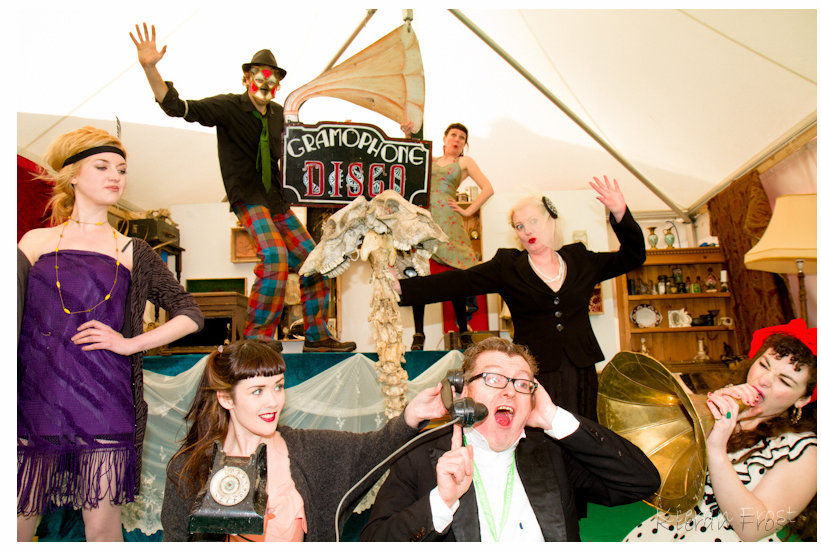
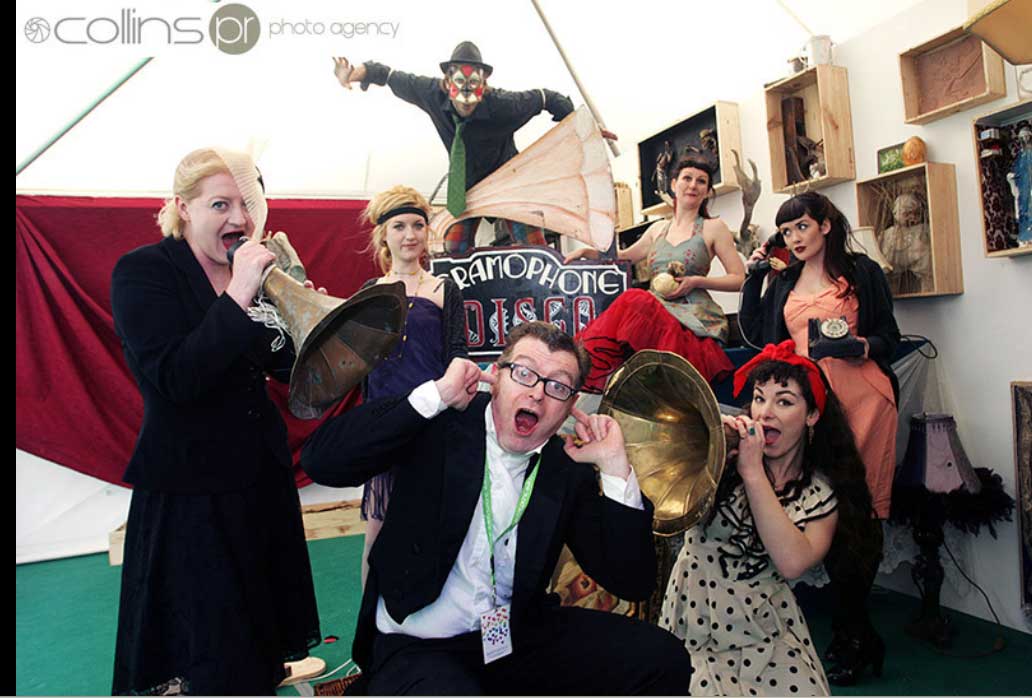
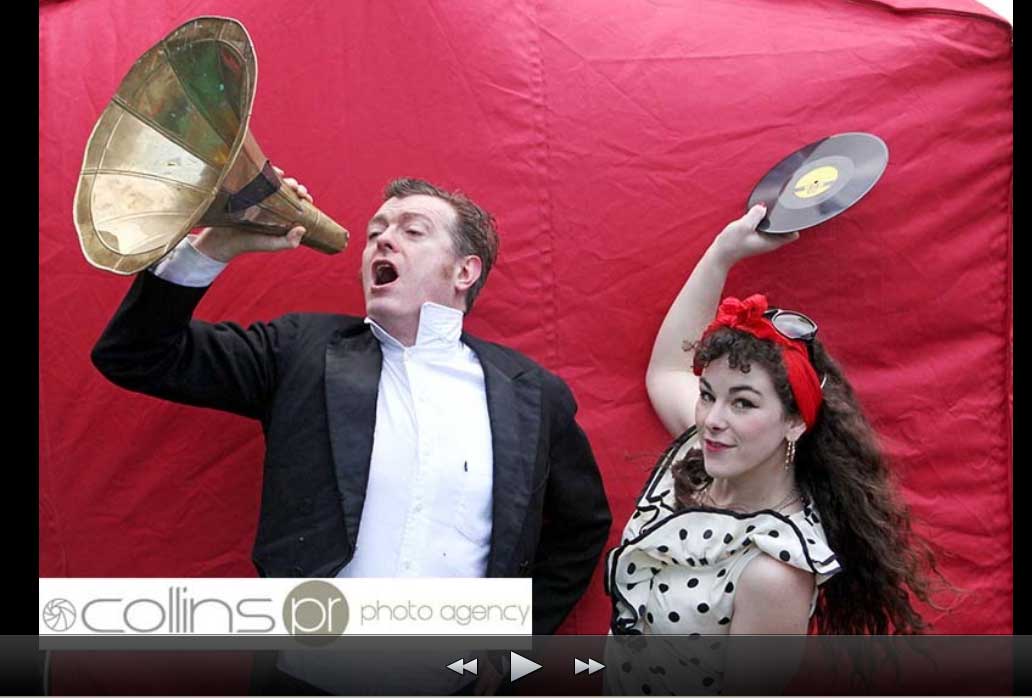
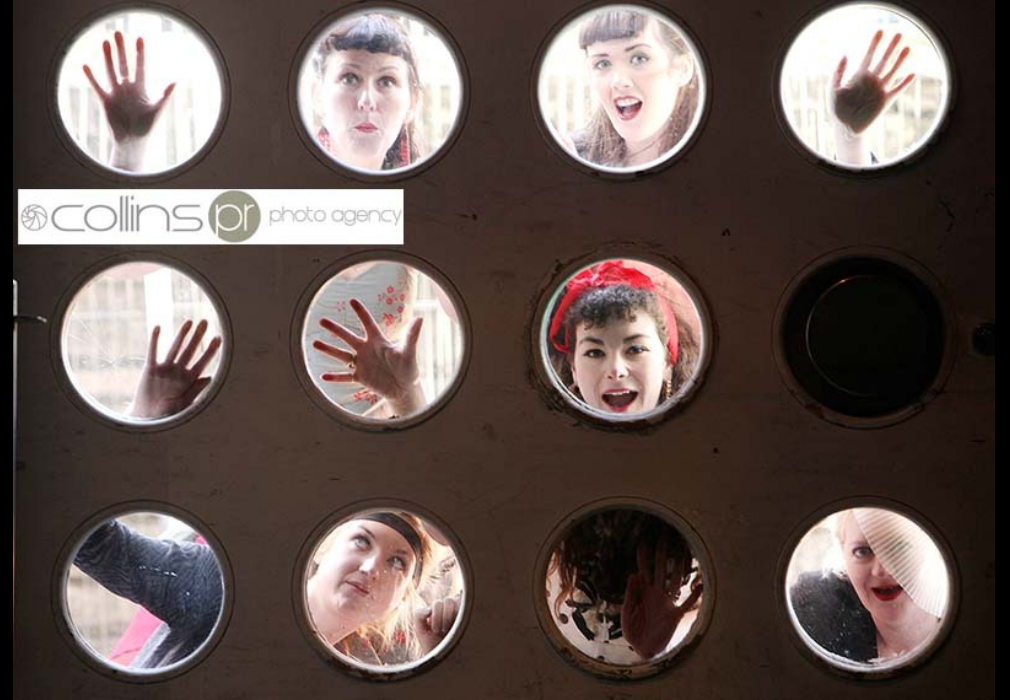
and did a fun , cheesy pr/gig thing for the Electric Picnic. Below pics that ran in most of the Irish rags.
And at the moment music wise, really feeling –
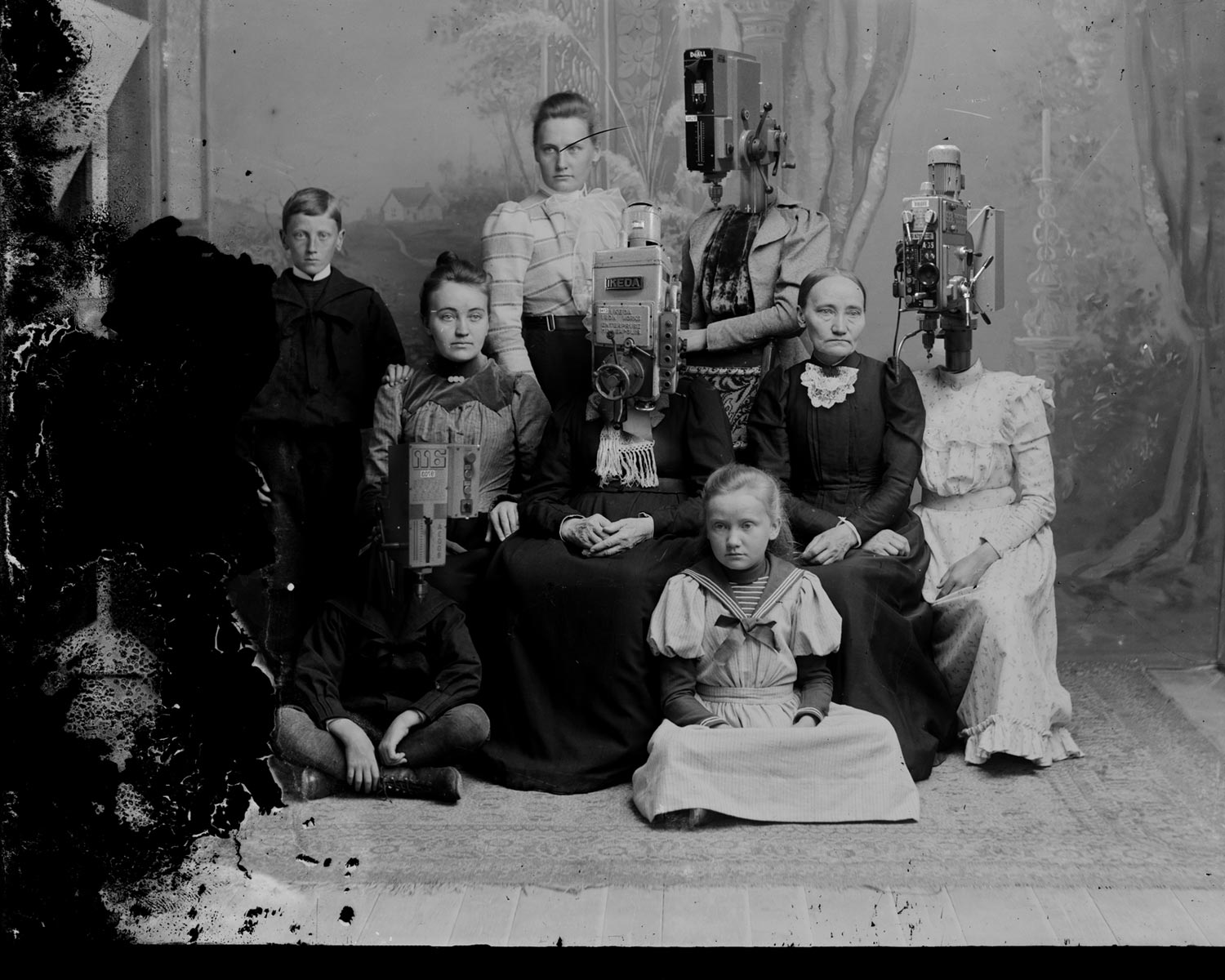
Have to go battle the doleful forces of free money, back later and finish this.
Also a couple of radio show which I’m uploading now.
Community Skratch games at the !K Club
Posted by homoludo on February 16th, 2011 filed in !Kaboogie, gigs, Irish producers, live sets1 Comment »
At the K Club this week
Â
*DEVIANT (community skratch / alphabet set / stress debt & chest pains)
*JIMMY PENGUIN (comm skratch / alkalinear)
*!KABOOGIE Residents
Thurs 17 Feb
10pm – 02:30am
@ The Sweeney Mongrel, Dame St., Dublin 2.
FREE

In the run-up to one of Ireland’s best weekend events, the annual Community Skratch Games in Galway, !Kaboogie are delighted to welcome two of its guiding spirits, Irish West Coast hip hop legends, DEVIANT & JIMMY PENGUIN, to the East side(Dublin).
DEVIANT
Deviant has been releasing out some of the most interesting leftfield hiphop of recent times. And that’s not restricted to Ireland. Using sound sources of Irish and English trad music, Prog, and Jazz. Scratched, looped and processed live. A refreshingly bumpy road towards composition and not content to let a computer do all the hard work. Relying on a stack of obscure records, some battered turntables and a good ol’ fashioned warped imagination, Deviants work has intense dedication and individual eccentricity slapped all over it.
DEVIANT LINKS:
http://deviantandnaiveted.bandcamp.com/
http://soundcloud.com/deviantandnaiveted
“Shoes Not Not” video: http://www.youtube.com/watch?v=GSVEOgOkDgg
JIMMY PENGUIN
Even just glancing over this chaps output over the last few years makes you realise that words like “prolific” and “dedicated” are almost understatements. Jimmy Penguin is one of Ireland’s hidden electronic diamonds. Hailing from Galway in the blustery west of Ireland, Jimmy makes music that varies between sultry bass heavy electronics, progressive scratch and slow burning ambient tracks richly orchestrated with organic instrumentation. Yep this guy is a jack of all trades. If you like what you hear, then prepare your hard drive for a feck-load of quality free tracks and mixes that are available online.
JIMMY PENGUIN LINKS:
http://jimmypenguin.bandcamp.com/
http://soundcloud.com/jimmy-penguin
http://jimmythehideouspenguin.jamendo.net/
http://freemusicarchive.org/member/jimmy_penguin/blog (THIS INCLUDES DEVIANT ALSO, & MUCH MORE COMMUNITY SKRATCH GOODNESS)
“Bastard Lawyer” on YouTube:
Deviant – Shoes Not Not
www.kaboogie.net
www.myspace.com/kaboogiemusic
Flexi Pop – Rock and roll synth histories
Posted by homoludo on February 10th, 2011 filed in industrial design, rock and roll, syths, theory, time travel, writing1 Comment »
Great essay on Industrial design and synth histoy from the ever readable mute magazine. I’ve annotated it with youtube clips of the music mentione. And added a couple I think apply.
Flexi Pop
By Pil and Galia Kollectiv
The introduction of the synthesizer gave PoMo bands the means to replay the history of rock ‘n’ roll with the authenticity knob turned down low. In this month’s music column, Pil and Galia appreciate the flatlands of the synth cover.
An invisible revolution took the United States by storm in the late 1960s – the Flexible Manufacturing System. Perhaps it even had greater implications for the world today than the better known social transformations of the period: the hippies, psychedelic drugs, protests against Vietnam or the student revolt. And yet it has received scant critical attention over the last 40 years since, until recently, the term had little meaning outside engineering conferences on industrial production methods and efficiency. Before 1965, manufacturers tended to concentrate on streamlining industrial procedures to reduce costs and increase productivity. The Fordist model of the assembly line still dominated the market, and companies were busy constructing support systems to enable repetitive, and regularised manufacturing. This approach was immortalised in Henry Ford’s famous words from 1909: ‘Any customer can have a car painted any colour that he wants so long as it is black’. The ideal customer and the perfect car were both completely predictable and manageable within a rigid plan. It was the responsibility of manufactures to create efficient and controllable products and only then, via advertising, consumer desire for them.
Image: AlliedSignal’s Flexible Manufacturing System

But the Flexible Manufacturing System, developed by Theodore William in Edinburgh in 1965, changed all that. In essence, FMS conceives of industrial manufacturing as a process that can be changed or adapted rapidly to manufacture different products or components at different volumes of production. This required a large number of machines which could be coordinated by a central computer and which would be flexible enough to handle different tasks and absorb sudden changes to volume, speed or design. The influence of this now obvious idea was dramatic. First of all, the products themselves became fluid and Ford’s inevitably black Model T was soon replaced by the seriality of, say, the eight different colours of the iPod nano. The FMS also gave birth to the limited edition product, from the Christmas flavored Starbucks Gingerbread Lattes of December to the heart-shaped Krispy Kreme donut of Valentine’s Day. But, more importantly, FMS was a Copernican revolution that inverted the causality of manufacturing: instead of a product that pre-exists the consumer, manufacturers began to look for the slightest hint of a consumer trend that could be quickly translated into products with a guaranteed market. Since machines were more adaptable and it was possible to easily and rapidly re-organise assembly lines, consumer demands could determine the product.
The influence of these new industrial ideas on politics from the ’70s onwards is evident and well documented. These could be seen reflected in the move away from ideology to a politics based on constant opinion polls and control groups that came to prominence during the Clinton years. But the links between the changing industrial landscape and art and music have not been given due attention and can offer an interesting angle from which to complicate our thinking on postmodernism. Visual art, perhaps, presents a clearer case. In the early 1960s, pop art was premised on an evaluation or even admiration of mass commodities. Pop art exercised several procedures around these commodities: their relocation, following Duchamp, from the supermarket or mass media to the gallery (Warhol, Lichtenstein) and their subsequent re-contextualisation; their material transformation (Oldenburg); or a blurring of borders between background and foreground, the human subject and the world of commodities (Wesselman). All of these mechanisms addressed the commodity as a unique, fixed object and dealt with it only on the level of consumerism, only after it was released to the market as a signifier of desire.
When Warhol was working with pseudo-industrial repetition, he simply duplicated the exact same object, be it a Brillo box, a Campbell soup tin or a print of Marilyn. But the generation of American artists who inherited pop art revised this relationship with the commodity in the late ’60s and throughout the ’70s. Minimalism is still talked about through Michael Fried’s trite notions of ‘relationality’ and ‘literalism’, but it is better viewed as an artistic response to FMS. These artists created flexible and modular systems that enabled them to think of the commodity at a higher level of abstraction. Unlike the Brillo box, Sol LeWitt’s modular cubical structures could be easily re-arranged to create endless variations. Similarly, Dan Flavin’s use of cheap commodities (neon strips) is not so much about their singular identity as objects of desire but their inherent malleability, the fact that the commodity becomes a flexible building block that could be cut to different sizes and thicknesses, and arranged in a variety of ways. Donald Judd’s concrete structures are perhaps the most obvious illustration of this, since the artist used industrial molding techniques to remove the object from its place in a stable relationship with consumers and other objects on the market and re-think it as an abstract flexible system. These artistic practices were not so much attempts to move away from commodity-fetish, from the image and the aesthetic power of the commodity, as readjustments of aesthetic language to account for newer industrial models and the flexibility they demanded.
Popular music can also be looked at through the same prism, but perhaps because a lot of the critical discourse surrounding music is still loyal to ideas of authenticity, individualism, talent and a unique artistic voice, music is rarely discussed in the context of material and industrial production. Here, through the framework of the cover version, a shift can also be observed in the attitude of artists towards other commodities or, more specifically, given pop songs. The repertoire of the bands of the early ’60s, and particularly the ones associated with the first wave of the British invasion, was almost exclusively drawn from the American tunes of the ’50s. The songs these bands covered were mostly associated with the early rock’n’ roll, electric sound of Chicago and the Memphis blues they listened to as teenagers. These covers paid homage to the double take on freedom latent in those songs: at its core, it was the sound of a southern black culture landing on the industrial North with great force. But for the British bands, these were also the sounds of Americana, products of an affluent, youthful, fast culture, the sonic equivalent of the Cadillac or Coca Cola. Cleansed of (racial) context and aural grit, the Rolling Stones’ covers of Chuck Berry functioned in much the same way as Warhol’s empty Brillo boxes, simulacral ciphers of a hyperreal consumer culture.
In the ’70s, however, these appropriations gave way to a lesser known breed of electronic remakes. Stripped down to a bare minimum of broken chords, the minimal synth cover versions that emerged with the rise of the synthesizer reduced the structures of the consumer landscape in the same way as the artists of minimalism. Much of the supposed shock of the new in the punk sound was in fact indebted to a revisiting of, by now, fairly classic rock ‘n’ roll, rubbed raw into the most primitive elements you could get away with, as evidenced by the Sex Pistols’ cover of Eddie Cochran’s ‘C’mon Everybody’, for example. But it was only with the advent of the synthesizer that bands could really discard the guitar-bass-drums aesthetic that defined rock ‘n’ roll and begin to challenge its structure more rigorously. Perhaps the best known precursors of these experiments are Suicide’s re-imaginings of the ’50s as a hollowed out bank of sounds and gestures. Just as Judd, LeWitt and Flavin replaced the supermarket with its empty shell – grey, cold, neon-lit expanses of industrial wasteland – Alan Vega and Martin Rev used the new capacities of the Korg Mini Pops to distill the ghost of Elvis into a pulsating signal, like a fluorescent tube at the end of its life, flashing on and off in a vacant lot. The early ’60s cover version was devoted to content: who you covered was crucial. But for Suicide, Elvis and Chuck Berry were all the same. The noise of motorcycle gangs and the slow dances of a high school prom were boiled down to a psychotic sugary abstraction.
What expressiveness remained in Suicide’s neo-rock ‘n’ roll was excised by the minimal synth bands that followed. When Daniel Miller recorded his Music for Parties in 1980 under the pseudonym Silicon Teens, he wanted to find out what Chuck Berry would sound like if he’d played a synthesizer instead of a guitar. But he was also interested in the fact that new electronic instruments allowed you to prioritise the idea over the execution: you didn’t have to be a songwriter or musician to make music with them. In this he was demonstrating Phil Oakey of the Human League’s well known comment, that synth music was even better than punk because you didn’t even need to learn three chords to play it, just one finger. But he was also following the logic of much concurrent conceptual and minimal art that sought to displace the artist’s gesture using technical fabrication processes borrowed from post-industrial manufacture. The resultant album, featuring covers of ‘Memphis, Tennessee’ and ‘Judy in Disguise’ has been largely consigned to the novelty bin of history, but its interpretation of the canon of rock ‘n’ roll for the wired generation is exemplary. The combination of dead pan delivery with a beat faster than even Chuck Berry’s nimble fingers somehow manages to both delete the decades of musical cliché that had clogged the genre since the ’50s and overwrite it with the immediacy of proto-rock folk music like creole zydeco.
Of course a better known version of the same idea is Flying Lizards’ Top Ten. Following the success of 1979’s ‘Money’, and in light of the relatively quiet reception of a second album more focused on David Cunningham’s experimental music, Top Ten was comprised mainly of reworkings of rock ‘n’ roll classics like ‘Tutti Frutti’ and ‘Dizzy Miss Lizzie’. Here the icy vocals of Sally Peterson, who followed in Deborah Evans-Stickland footsteps after ‘Money”s one hit wonder, were as important as the rudimentary instrumentation. Somehow after decades of sweaty rock ‘n’ roll put through the meat grinder of the culture industry and packaged in wave after wave of retro revival, the clinical, one-tone-fits-all approach seemed better suited to address the age. If rebellion had been fully co-opted, perhaps a kind of pre-empting of the evacuation of content and emotion that was part and parcel of the marketing of youth culture was strategically more useful. Flying Lizards video clips show guitars, drums and keyboards in place, but by no means in conventional use, more frequently being thumped than played, as a pre-recorded soundtrack dictates the pace.
Over in France, Doctor Mix and the Remix’s Wall of Noise, represented another whole album’s worth of standards massacred by post-punks Métal Urbain’s Eric Debris. With the aid of a drum machine, cheap reverb and guitar in overdrive, his rendition of ‘Brand New Cadillac’, but also more recent, alternative classics, like the Stooges’ ‘No Fun’, is notable for its slack attitude, kept in check only by the regimented timing of the machine.
This approach was taken to an extreme across the Atlantic by the Better Beatles, whose payback for the British Invasion on the album Mercy Beat was the cruelest of all. As news of John Lennon’s murder took over the airwaves, the Omaha based group considered the fab four to be an oppressive influence. But instead of going back to the origins of the American rhythm and blues sound that Lennon and McCartney were trying to emulate, they came up with a better strategy. Applying a devastating Midwestern drawl to a playlist of sacred cows, and working in ignorance of the Flying Lizards experiments, they didn’t even attempt to capture the signature melodies of tunes like ‘Penny Lane’, ‘Hello Goodbye’ or ‘Paperback Writer’. Instead, they combined random freeform basslines, basic drumming with simple synth refrains, rehearsed them to death to kill off any freshness or spontaneity, and produced music that sounded nothing like the Beatles beyond the unceremoniously recited lyrics. Often compared with the Residents’ Third Reich and Roll album, the Better Beatles were far less ambitious in their re-tooling of the music establishment. Initially playing around with Beatles songs because they had no original material to work with, they even quite liked the Beatles and just thought the idea was funny. But with the tenacity of a one liner taken too far, they succeeded in both mutilating the transitional moment of popular music’s acceptance as a serious medium and rebuilding the ruins into something that could still be meaningful long after the momentum of the ’60s was truly over. With a few looping riffs, the cover version was thus transformed from a medium of reverential deference to a subversive critical tool, externalising the repressed psychosis of the silly pop refrains that the white rock ‘n’ roll groups of the ’60s bleached of innuendo.
‘To make a rock ‘n’ roll record, technology is the least important thing’, said Keith Richards, meaning that music is an essence removed from its particular historical and material context. This is what allowed the Stones to translate those loud sexual and racial insinuations of early rock ‘n’ roll into slick English, boyish hip sounds. Each southern delta blues number they covered has an irreducible quality beyond its means of production. The minimal synth of the ’70s and ’80s, on the other hand, was busy with the project of deconstructing, rather than transcending the American century. What bands like the Flying Lizards or the Better Beatles aimed to achieve was to look at the recent past of pop music as a structure, and to collapse differences between styles, genres or trends, what Adorno called the manufactured difference between cultural product A versus cultural product B. This was a deliberate strategy of de-mythologisation, moving away from a Debordian conception of spectacular time. Spectacular time, wrote Debord, is the presentation of pseudo-events as significant differences: the past accumulated and consumed like any other commodity:
The production process’s constant innovations are not echoed in consumption, which presents nothing but an expanded repetition of the past. Because dead labor continues to dominate living labor, in spectacular time the past continues to dominate the present.
The interpretation of the past in minimal synth – empty of consumerist desire through technological means that rendered it cold and repetitive – seems to go against Debord’s analysis of popular culture’s attachment to the past. In fact, Debord’s critique itself, because of the changes in manufacturing discussed here and their influence on culture, has become a sort of style in its own right. To be cool in post-Fordist times means not to direct your consumerist desire towards a particular product or a particular moment in history, but to be able to view time, place and culture as flexible systems which can be customised at will.
Superficially, there is something incredibly cynical about the cool, sarcastic appropriations of minimal synth, denying rock ‘n’ roll what little authenticity remained in an ossifying form. At the same time that Tin Pan Valley released their ‘double B-side’ of synthed-up covers of ‘Hanky Panky’ and ‘Yakety Yak’, and that Sun Yama recorded their brilliant cover of Bob Dylan’s ‘Subterranean Homesick Blues’, Kraftwerk were developing new ideas for a techno-pop that would leave guitar music behind. But rather than present a new narrative of progress through electronic music, these forgotten bands applied retro-garde methodologies to the existing ones, positing alternative timelines that collapsed the history of popular music as it had been with possible histories of futures past, where Chuck Berry did get to play a Korg instead of a Gibson. When we think of the role of the cover version in contemporary pop idol type reality television competitions, where the aim of each contestant is to decant as much subjectivity as possible into a given text, all the while obscuring the mechanisms which produce this subjectivity in front of our faces, perhaps this non-committal inhabiting of dead forms gains political relevance for today.
Pil and Galia Kollectiv
and…
PCPRaidio C!ties
Posted by homoludo on February 7th, 2011 filed in radio showsComment now »
PCPRaidio C!ties
This week radio show.
[audio:/PCPRaidio_Cities_05_02_2011.mp3]Â Download or click to play for mobile devices
ARTISTÂ Â Â Â Â Â Â Â Â Â Â Â Â Â Â Â Â Â SONGÂ Â Â Â Â Â Â Â Â Â Â Â LABELÂ Â Â Â Â Â Â Â Â Â Â Â Â ALBUM
PCP 2/5/2011
1.   KERRI CHANDLER   “Bar a Thym”   NRK Music   Bar a Thym / Sunshine & Twilight – Single
2.   MOSCA    “Don Corleone winery/ bar a thym. Mash”Fact   Mosca fact mix
3.   KASSEM_MOSSE “Demo_Drums_Ripping” Kinda Soul    2d
4.   MOSCA    “Tilt_Shift_Julio_Bashmore_Remix”   Fat City   Producer 3 Part 1
5.   KRYSTAL KLEAR    “Persuaded_Me”   Hoya:hoya    Hoya:hoya 1 – Illum Sphere, Lone & Krystal Klear
6.   HACKMAN      “Made Up My Mind”   Ptn   Made Up My Mind / Bam Bam
7.   M.I.A.”IT Takes a Muscle Pearson Sound Refix”   XL IT_TAKES_A_MUSCLE
8.   A MADE UP SOUND   “Demons (Reprise)   A Made Up Sound   Demons
9.   MARCUS PRICE & CARLI   Var E NÃÃÃken (Girl Unit Remix) 14 tracks 14 tracks: Dance du Jour
10.   REDLIGHT FT. MS DYNAMITE “What_You_Talking_About_Roska_Remix” MTA Records What_You_Talking_About
11.   PLASTIKMAN    “Spastik”   Novemute   Spastic ep
12.   HYETAL      “Phoenix”  ORCA RECORDINGS   Phoenix / Like Silver ep
13.   EOMAC    “You Don’t Know What This Means To Me”   Hsuan Records   EP One (IRE)
14.   GIGGS   “Saw”         SN1 Records   A Walk in the Park
15.   CLOUDS &NATURAL MARCUS   “Mighty Eyeball Rays” 2nd Drop Music    Mighty Eyeball Rays
16.   ROYAL T   “Damn It! (Mensah n Superisk Remix)”   Boogaloo City   Damn It! EP
Sixfoot Apprentice Raidio Playlist 05-02-2011
ARTISTÂ Â Â Â Â Â Â Â Â Â Â Â Â Â Â Â Â Â SONGÂ Â Â Â Â Â Â Â Â Â Â Â Â Â Â ALBUMÂ Â Â Â Â Â Â Â Â Â Â Â Â Â Â Â Â Â Â Â Â Â Â Â Â Â Â Â Â Â Â Â Â LABEL
1.   C!TIES – “Satellites Rmx” (from ‘SDCP001′ on Stress Debt Chest Pains Records) IRE
2.   JAZZY JEFF & THE FRESH PRINCE – “Girls Ain’t Nothin’ But Trouble (Dj 0.000001 Remix)” (from Magicalbass Soundcloud)
3.   CHARLES TREES – “Mahjongg” (from ‘The Dream’ on Musique Large Records)
4.   DJ 0.000001 – “We All Fall Down” (from Magicalbass Soundcloud)
5.   AEED – “Elektricity” (from ‘Synesthesia’ on Error Broadcast Records)
6.   T-WOC – “Jarpoon” (unreleased) IRE
7.   TEN PAST SEVEN – “Johnsons Cows (Toby Kaar Remix)” (from Toby Kaar Soundcloud) IRE
8.   LOW LIMIT – “Where You Been 7.0” (from ‘The Golden Handshake EP’ on Numbers Records)
9.   BOSCO DELREY – “My My Racecar” (from ‘Space Junky / My My Racecar EP’ on Mad Decent Records)
10.   ANGKORWAT – “Big/Little Edie” (from ‘Early EP’ on Angkorwat Bandcamp) IRE
11.   YANNIS KYRIAKIDES & ANDY MOOR – “Vamvakaris” (from ‘Rebetika’ on Unsounds Records)
Shit Blogger
Posted by homoludo on February 3rd, 2011 filed in !Kaboogie, flyers, free music, gigsComment now »
It starting to feel like going to confession when I blog (apart from putting up radio shows) – ‘forgive me father, it’s been twenty years since my last confession…’ etc. This post is to round up a few gigs that are on at the moment. A lot of good stuff , local and international on this week. And a shout(lovely dj slang) out to everybody in Galway for making Bap to the Future a great night, during the gig and after. Boom shaka laka.
Tonight the Kclub with the Standard crew. It’s a night showing our appreciation of City Discs, a top Dublin record shop which is closing. I feel obscurely guilty about this as I’ve seriously reduced the number of records I buy over the last 18 months ie. since I began using serato. I was a major vinyl loyalist, but no longer in fact I’ve been heard to gleefully shout ‘fuck vinyl!’. If dj’s stop buying vinyl the games is up.Which is sad but there ya go.

And tomorrow night the launch of Big Monster Love‘s album ‘Game Over’. It’s available here. Support on the night come from Moutpiece and Brian Kelly.
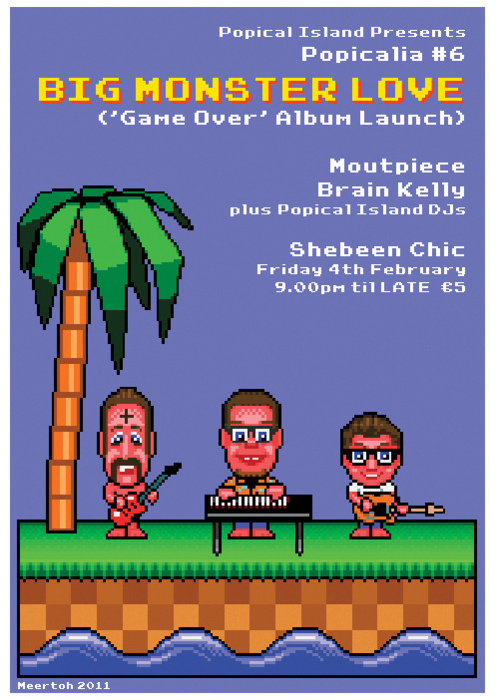
There’s a bunch more (such as Ramadaman and Mosca on Saturday) but put them up later.
PCPRaidio_Stand_Down_Cohen
Posted by homoludo on February 2nd, 2011 filed in radio showsComment now »
 SixFoot apprentice and I Saturday week ago.
artist   name   album   label
OBJEKTÂ Â Â Tinderbox
ROBERT HOOD   _Museum -   Minamal Nation   -Axis
OBJEKTÂ Â Â The_Goose_that_Got_Away
AALIYAHÂ Â Â R U That Somebody? (Brenmar Windy City Mix)
HACKMAN    Made Up My Mind   Made Up My Mind / Bam Bam
M.I.AÂ Â Â Â Â Â Â Â Â Â IT_TAKES_A_MUSCLE_PEARSON_SOUND_REFIX
LB_DUB_CORPÂ Â Â Take_It_Down_In_(dub)
JAMES BLAKEÂ Â Â I Mind
CASSIEÂ Â Â Must Be Love (Jacques Greene’s Marriage Proposal mix)Â Â Â palmsout.com remix sunday
MOUNTÂ KIMBLEÂ Â Â mount Kimble -Before_I_Move_Off
VHS Head   Trademark_Ribbons_of_Gold
THE BIONIC RATS – “Stand Down Cowen” (from The Bionic Rats bandcamp site) (IRE)
THE ONE AM RADIO – “Take On Me” (from ‘Pop Massacre’ on Friends Of Friends Records)
CAPTAIN MOONLIGHT – “Well Now (Rubberbandits Remix)” (from ‘Well Now EP’ on Captain Moonlight bandcamp site) (IRE)
M.O.P. – “Ante Up (Remix)” from ‘Ten Years And Gunnin’ on Columbia Records)
MANUS GOAN – “Superstition Remix” (unreleased) (IRE)
PRINCE KONG – “Fugue” (from ‘I Make Me Rigid’ on Middle Management Records) (IRE)
MOTHS – “Blisters” (from Moths bandcamp site) (IRE)
THE XX – “Basic Space (Lunice Remix)” (unreleased)
THE PIXIES – “Wave Of Mutilation (Live)” (from ‘Pixies At The BBC’ on 4AD Records)
RICHIE PRICE – “I’m That Guy” (unreleased)
MELJOANN – “Reptillian” (from ‘Squick’ on Boy Scout Audio Records) (IRE)
SRC – “Goomba VIP” (from ‘Quality Street’ on Butterz Records)
PRGz – “Stop’n’Go” (from ‘Rocket Fuel EP’ on Paper Route Gangstaz Records)
THUNDERHEIST – “Jerk It (Megasoid Remix)” (from ‘Jerk It EP’ on Nasty Mix Records)
PCPRaidio Stand Down Cohen
Download or click for mobile devices
Meta:
Live every Saturday 10.30pm-12.00pm GMT - Twenty years and counting. Click the logo below to listen

Links:
- !kaboogie
- Big Monster Love
- raidio na life
- alphabet set
- www.weareie.com
- Soundtracks for them
- indymedia
- The Indiehour
- 2bit
- t-woc
- Smoke/less/fuels
- Ralph Croly
- diyirishhardcorepunkarchive
- audioterrorists
- badmongting
- Nialler 9
- K-Punk
- Beyond the Beyond
- Prancehall
- Mudd Up
- blackdown
- Word The Cat
- Mashit
- Ballardian
- Birdseed's Tunedown
- Lower End Spasm
- Scenexscience


- May 2021
- April 2021
- March 2021
- May 2020
- March 2019
- October 2018
- March 2017
- February 2017
- April 2015
- March 2015
- September 2014
- July 2014
- June 2014
- March 2014
- February 2014
- January 2014
- December 2013
- November 2013
- October 2013
- September 2013
- May 2013
- February 2013
- January 2013
- November 2012
- October 2012
- September 2012
- July 2012
- June 2012
- May 2012
- April 2012
- March 2012
- February 2012
- December 2011
- November 2011
- October 2011
- July 2011
- May 2011
- April 2011
- March 2011
- February 2011
- January 2011
- December 2010
- November 2010
- October 2010
- September 2010
- August 2010
- July 2010
- June 2010
- May 2010
- April 2010
- March 2010
- February 2010
- January 2010
- December 2009
- November 2009
- October 2009
- September 2009
- August 2009
- July 2009
- June 2009
- May 2009
- April 2009
- March 2009
- February 2009
- January 2009
- December 2008
- November 2008
- October 2008
- September 2008
- August 2008
- July 2008
- June 2008
- May 2008
- April 2008
- March 2008
- February 2008
- January 2008
- December 2007
- November 2007
